 0°
0°
Blog
Submarine Proteus S-113: a 360° virtual tour of Greece's first submarine museum
Fifty years of service. Around 260,000 nautical miles beneath the surface.
Since May 2026 the Hellenic Navy submarine Proteus (S-113) has been Greece's first submarine museum, moored at Palaio Faliro beside the battleship Georgios Averof and the trireme Olympias.
The 360° virtual tour takes you inside. 27 panoramas, 7 compartments, from the torpedo room back to the engine room. What you notice first is how tight everything is. Two men cannot pass each other in these passageways.
Since May 2026 the Hellenic Navy submarine Proteus (S-113) has been Greece's first submarine museum, moored at Palaio Faliro beside the battleship Georgios Averof and the trireme Olympias.
The 360° virtual tour takes you inside. 27 panoramas, 7 compartments, from the torpedo room back to the engine room. What you notice first is how tight everything is. Two men cannot pass each other in these passageways.
360 Virtual Tour Presentation
See the full project 360° virtual tour of the submarine Proteus S-113, Hellenic Navy →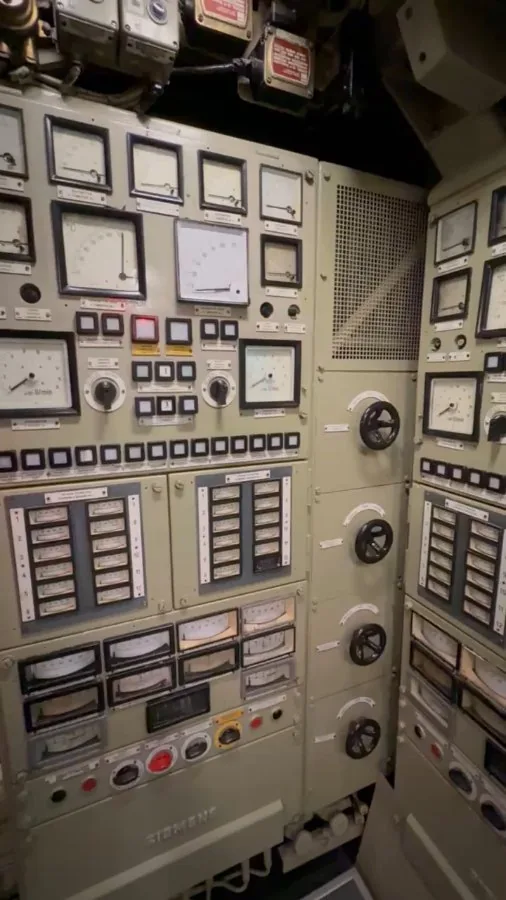
From Kiel to Salamis
Her keel was laid on 15 January 1970 at the HDW yard in Kiel. Launched 1 February 1972, first dive on 5 July, Greek flag raised aboard on 23 November of the same year, with Lieutenant Commander Timotheos Masouras as her first commanding officer.She sailed for Greece on 6 February 1973 and reached Salamis Naval Base on 16 March, after 3,280 nautical miles. She was the fourth Type 209/1100 submarine of the Hellenic Navy.
A year later she was at the centre of events. In July 1974, during the Cyprus crisis, she carried out three war patrols. On 14 August, Proteus and Triton were ordered to patrol north of Cyprus. That same evening the signal came to turn back.
The "Neptune-I" life-extension programme followed at Salamis. She was decommissioned on 16 May 2022.
The name carries a debt
There was an earlier Proteus. Built at Nantes in France, at the Ateliers & Chantiers de la Loire yard, between 1927 and 1929, and taken into the fleet on 31 August 1929.On 29 December 1940 she was on a war patrol in the Adriatic. She attacked an Italian convoy and sank the troop transport Sardegna.
After that it happened fast. She lost depth control, surfaced exposed, was rammed by the Italian torpedo boat Antares and went down with all hands. Forty-eight men were lost, among them her commander, Lieutenant Commander Michail Chatzikonstantis. She was the first Greek submarine lost in the Second World War.
The boat you visit today carries the name of one that never came back.
What you see inside the tour
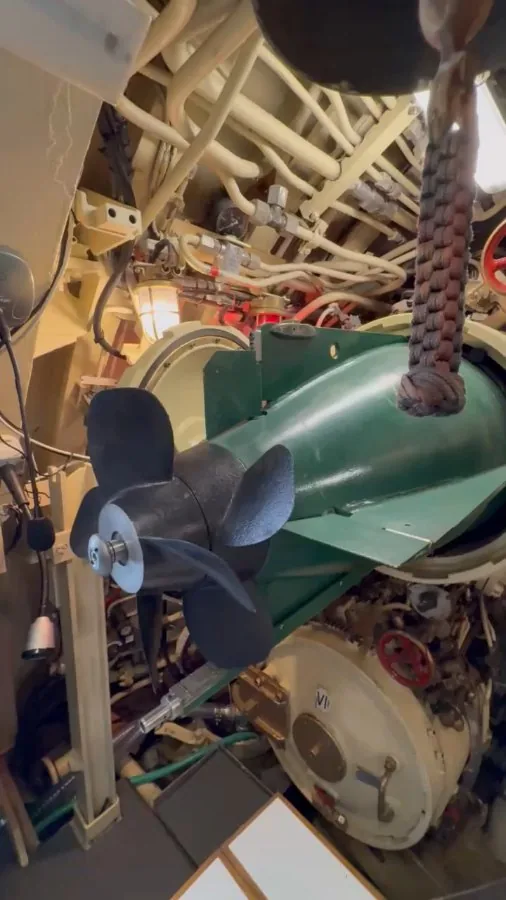
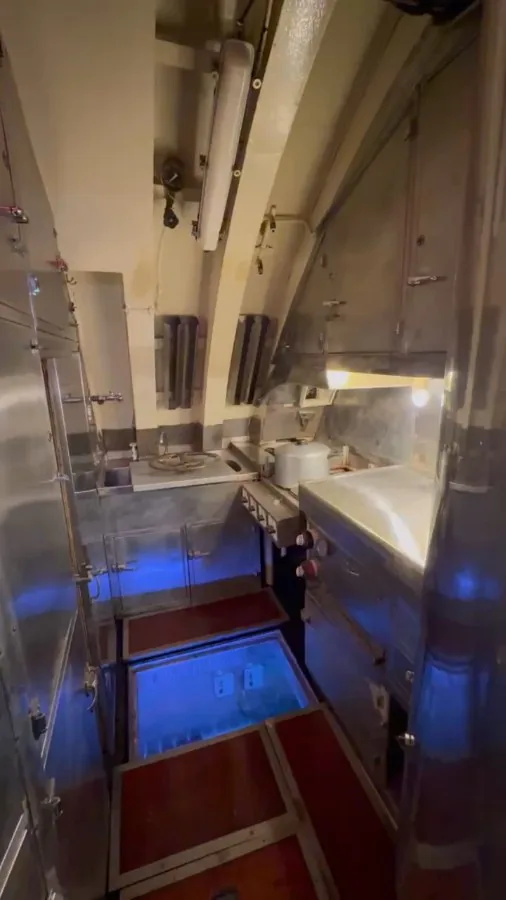
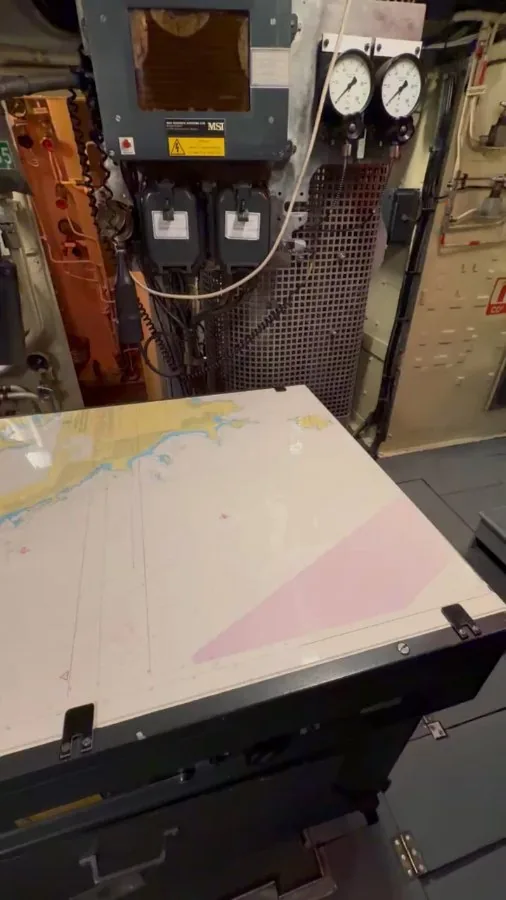
27 panoramas, 7 compartments.In the control centre, the bow periscope, the course plotter and the diving planes. Further aft the crew quarters, the galley, the captain's cabin. Forward, the torpedo room.
Every instrument has its own explanatory hotspot. There are embedded videos, and an audio environment recorded from the engines and the sonar.
Photographs of a submarine are easy to find. How tightly thirty men lived in one does not come across in a photograph.
Where it is, and who made this
Proteus was handed over as a museum on 11 May 2026, in the presence of the President of the Hellenic Republic, Konstantinos Tasoulas, and the Minister of National Defence, Nikos Dendias. She is an exhibit of the Naval Tradition Park "Odysseas - The Greeks and the Sea" at Palaio Faliro, created through a donation by the non-profit organisation "Kyklops".The virtual tour is a production of the Hellenic Institute of Naval History (ELINIS), with the technical work done by us, for the Floating Naval Museum "Battleship G. Averof".
We have documented a second Hellenic Navy floating museum as well, the destroyer Velos D-16, moored on the New Waterfront in Thessaloniki.
Do you look after a monument, a vessel or a collection that deserves to be seen by people who cannot travel to it? Talk to us.
Sources: Hellenic MoD · navalhistory.gr · Proteus I (Y-3)
Related Articles You Might Be Interested In
→

Destroyer Velos D-16: a 360° virtual tour of the Museum of the Anti-Dictatorship Struggle
→

The Kythira semaphore telegraph: a 360° virtual tour of a lost monument, digitally reborn
→
Meteora in a 360° Virtual Tour: What Actually Exists and What Is Missing
→
Which Greek Monuments and Museums Have a 360° Virtual Tour
→
Discover the Luxury of Kolonaki through a 360° Virtual Tour
→